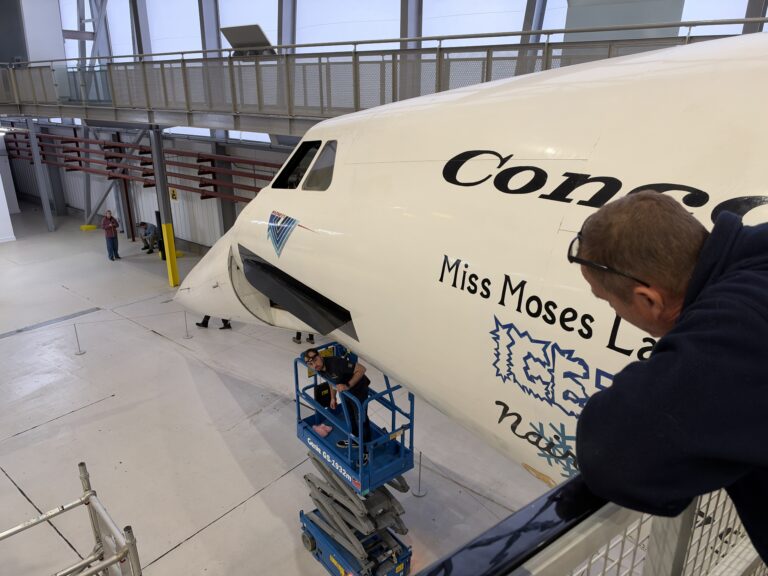
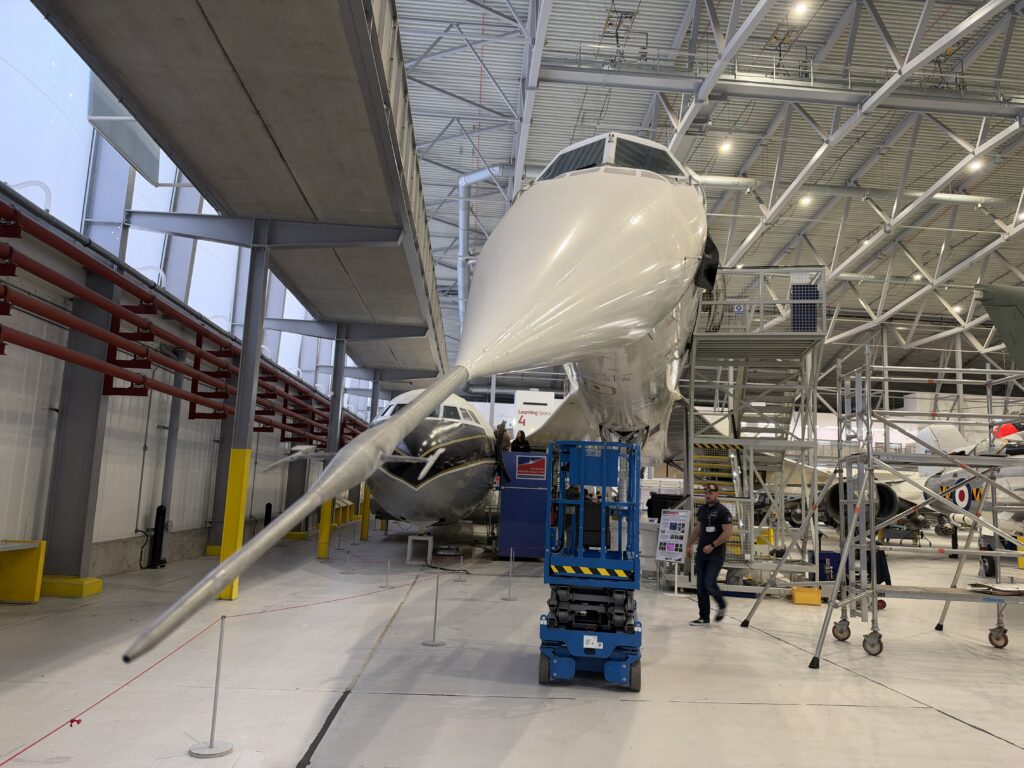
G-AXDN (construction number 101) is one of only two pre-production Concordes built, and the first of them to fly, in December 1971. She was used for development flying rather than passenger service, and during that work reached Mach 2.23 (1470mph) — faster than any of the production aircraft that followed. She has been at Duxford since 1977, cared for by the Duxford Aviation Society and the Heritage Concorde team.
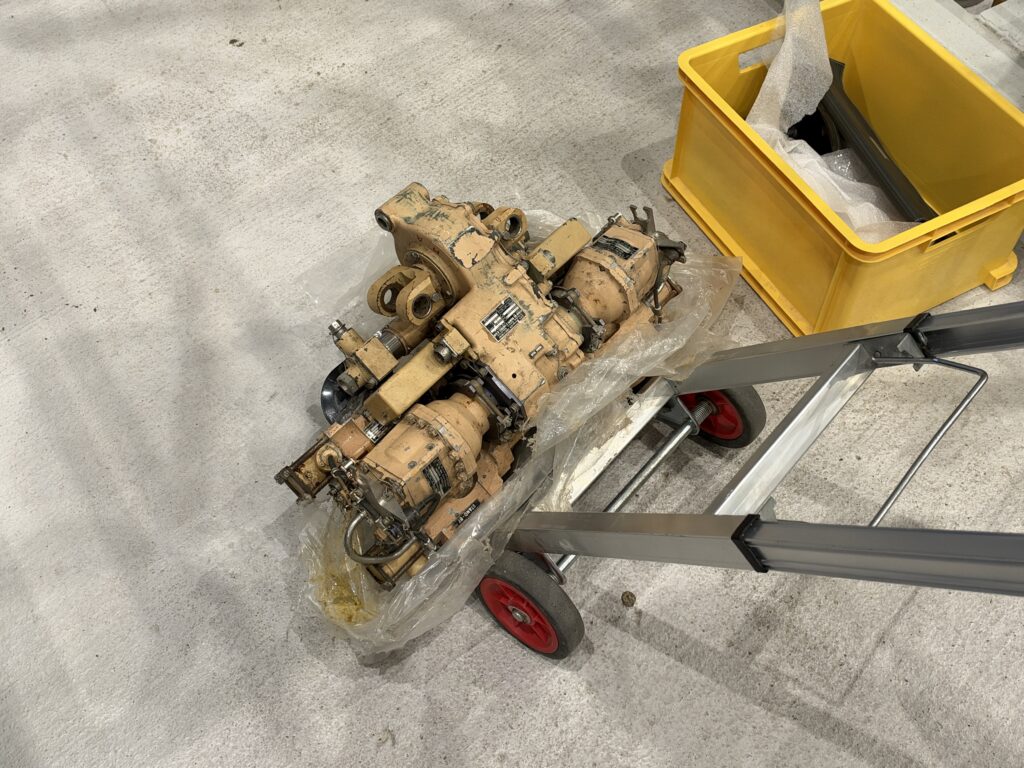
The first part is an air intake ramp actuator, built by D.B.A. (Division Air-Équipement). This is part of the variable intake system that allowed the Olympus engines to run at twice the speed of sound. It came from ex-British Airways stock, and it has been donated outright to the restoration. It is unrestored and will need conservation work, but it has gone to the people best placed to do that. It is known that these intake actuators were removed from a Concorde aircraft and retained by British Airways as spares, and this one came from that final stock. It carries an early serial number and a 1972 test date, placing it right in Concorde’s development years. Whether this exact unit was once fitted to G-AXDN can’t be confirmed without matching its serial to the aircraft’s own records — but given where it came from, a direct link is possible. A part that may well have been on a pre-production Concorde, back with one.
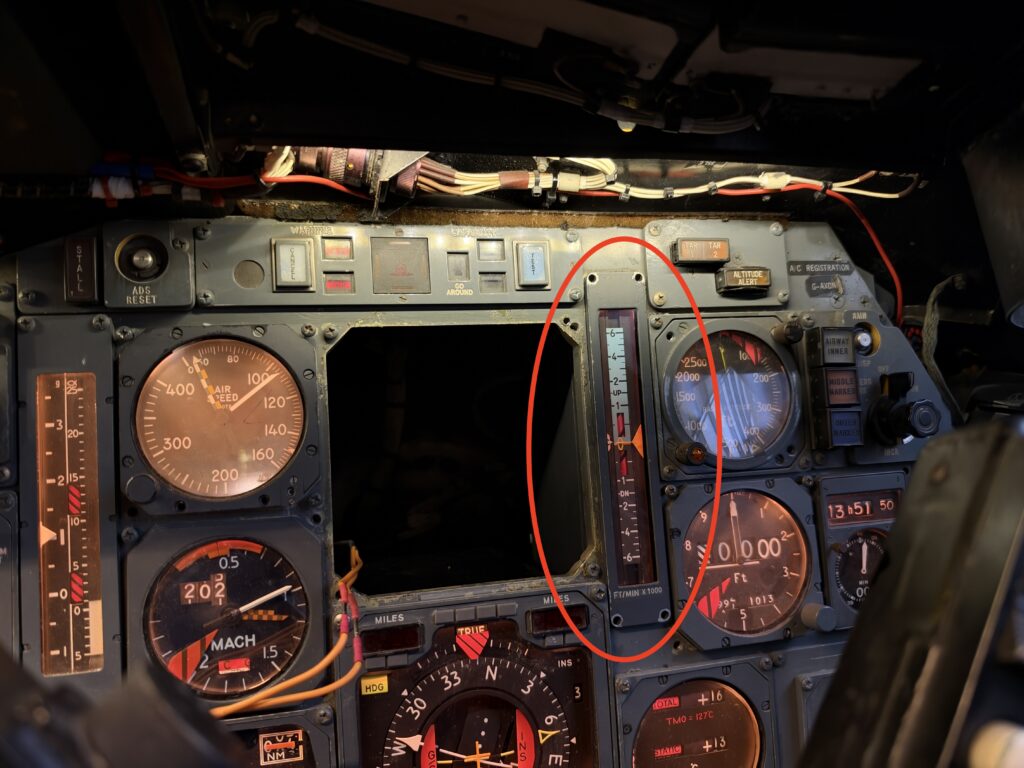
The second part is a cockpit instrument — a vertical speed indicator (VSI) also built by D.B.A. This instrument would show the Concorde’s rate of climb and descent. This part has been offered on loan rather than donated. It is one of the few instruments still missing from G-AXDN’s flight deck, so it has now been fitted in place and wired up for backlighting, in place of the dummy that stood there. It was manufactured in October 1971 — the same period G-AXDN was being built and made her first flight. Samuel had the honour of installing it and the connector pins behind fitted straight in. Exactly the right instrument for the aircraft.
All of the surviving Concordes are now in museums, so spare parts no longer come from airlines or production — they only surface through private hands. When a genuine part can be put back into an aircraft like G-AXDN, that is worth more than selling it.
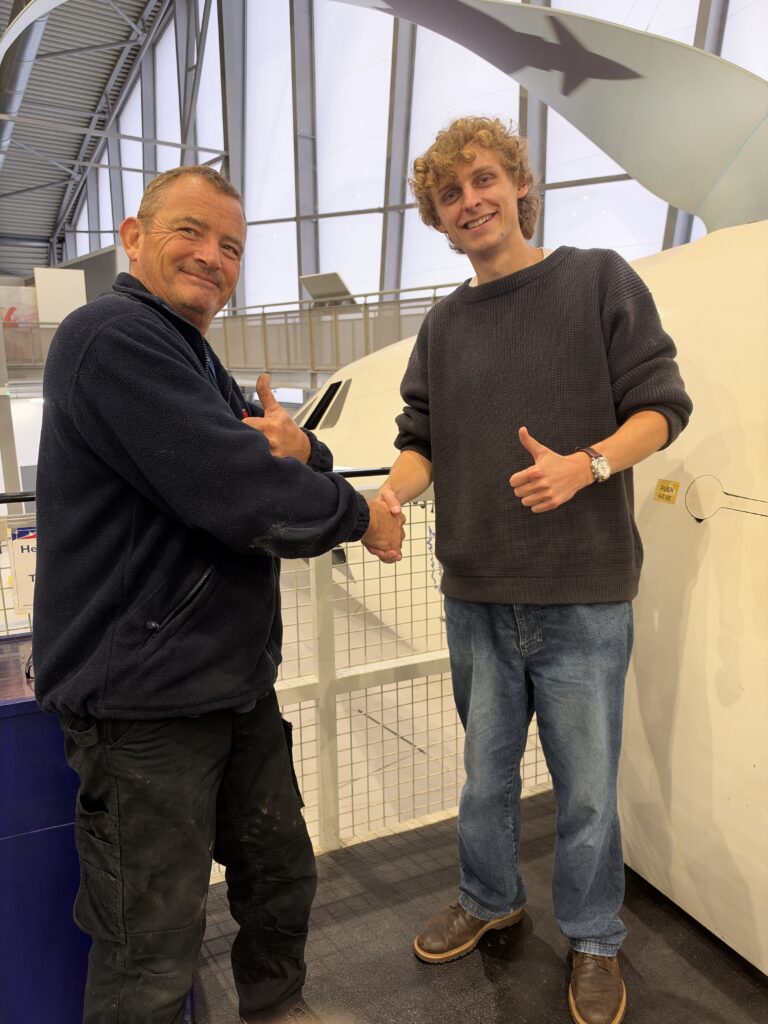
Samuel also spent the day with the Heritage Concorde team and was shown G-AXDN up close, including demonstrations of her droop nose — one of the many systems these volunteers worked so hard to restore and still maintain today.
Thanks to Graham Cahill and James Cullingham from Heritage Concorde as well as Peter Archer from the Duxford Aviation Society. Concorde Collectables is glad to see these parts back with G-AXDN, and looks forward to watching the restoration continue.


